


Why Ultra-Clear Glass Windows Are Worth the Investment: Safety, Light Transmission, Energy Efficiency, and Performance Explained
When choosing doors and windows for your home or building project, most people naturally focus on price, style, and brand. But if you’ve ever noticed, even when comparing the same doors and windows, ultra-clear glass often costs significantly more than standard tempered or clear glass. At first glance, they both look “clear,” so why is there such a noticeable price difference? This comprehensive guide dives into the reasons why ultra-clear glass is worth the investment, covering safety, light transmission, energy efficiency, insulation, soundproofing, and overall performance. Whether you’re a homeowner, builder, architect, or designer, understanding these factors will help you make an informed choice when upgrading windows.
1. Ultra-Clear Glass and Safety: Minimizing Self-Explosion Risk
One of the most critical considerations when selecting glass is safety. Standard tempered glass has a self-explosion rate of roughly 3 in 1,000 panels due to the presence of impurities like nickel sulfide. While rare, self-exploding glass can pose serious hazards in high-rise and multi-story buildings. Ultra-clear glass, on the other hand, has undergone advanced refining processes that minimize impurities, especially nickel sulfide, resulting in a self-explosion rate as low as 5 in 10,000.
The production of ultra-clear glass requires precise melting control and uniform composition, ensuring that even large panels are structurally stable and safe. For mid- to high-rise buildings, where large glass surfaces are common, this enhanced safety feature is invaluable. Choosing ultra-clear glass is not just about clarity—it’s about peace of mind and protecting both residents and property.
2. Enhanced Light Transmission: Brighter Interiors Naturally
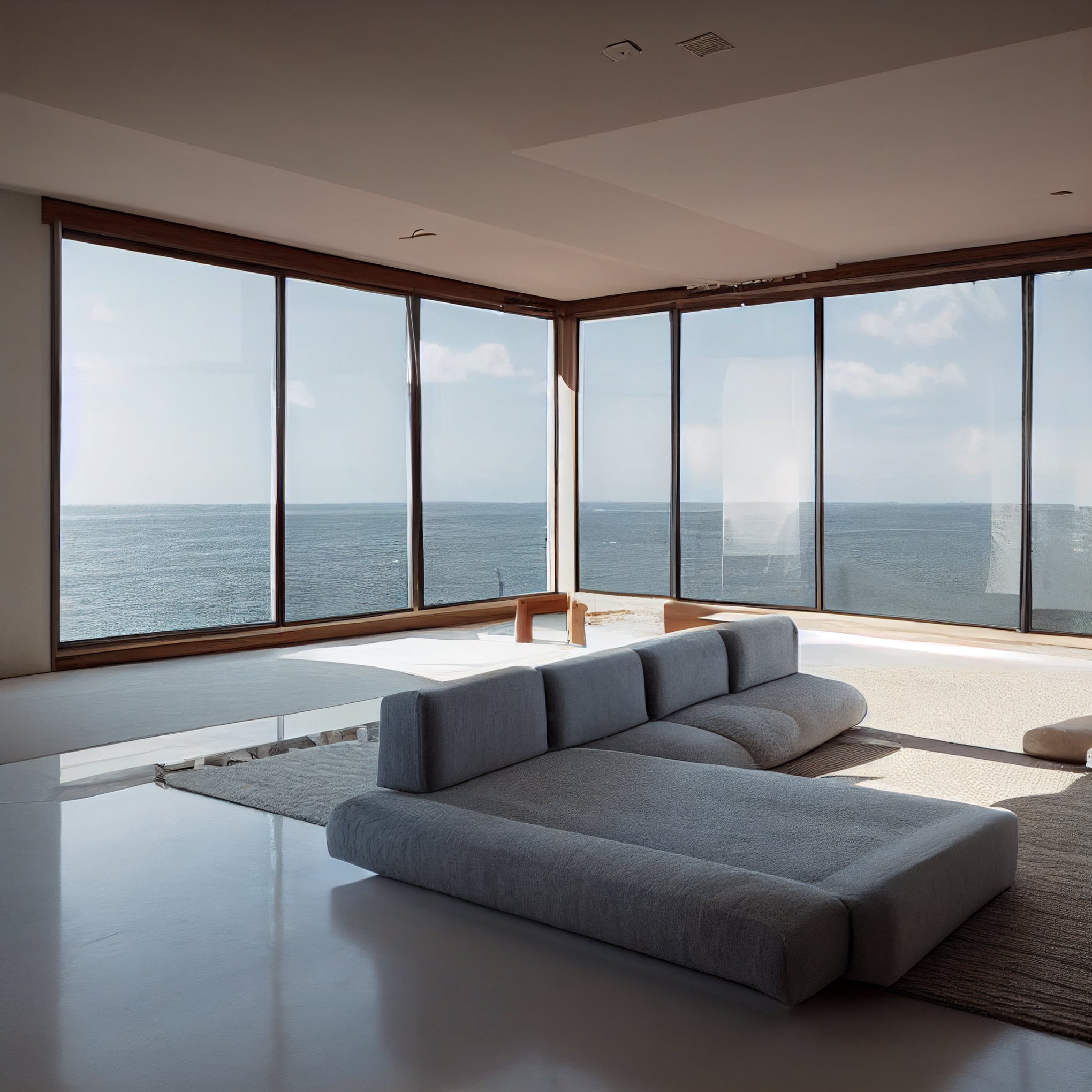
Light transmission is another area where ultra-clear glass outperforms standard clear glass. Standard clear glass typically allows about 85% of natural light to pass through and often has a slight greenish tint caused by higher iron content. Ultra-clear glass, by contrast, contains only 1/10th the iron content of regular glass, which boosts light transmission to up to 91.5%.
For low-rise rooms or spaces with poor natural light, installing ultra-clear glass can significantly brighten interiors during the daytime without the need for artificial lighting. This not only enhances the visual comfort of your home but also helps reduce energy costs associated with lighting.
3. Combining Ultra-Clear Glass with Low-E Coatings and 4SG Sealing Technology
Ultra-clear glass doesn’t just improve brightness and clarity—it can be further enhanced by pairing it with Low-E (low-emissivity) coatings and 4SG sealing technology.
- Low-E Coatings: These coatings improve energy efficiency by reflecting heat back into the room during winter and keeping heat out during summer. They reduce the need for heating or cooling and help maintain a stable indoor temperature.
- 4SG Sealing Technology: This advanced sealing method improves the durability of window panels, enhances insulation, and contributes to soundproofing. When combined with ultra-clear glass, it results in a high-performance window solution ideal for modern homes and offices.
For homeowners seeking triple-pane ultra-clear glass, the combination of Low-E coatings and 4SG technology provides the ultimate in insulation, energy efficiency, and acoustic comfort, making it an excellent choice for busy urban environments or noisy neighborhoods.
4. Optimal Choice for Orientation and Climate Considerations
Orientation matters when it comes to window selection. For south-facing windows or west-facing rooms, ultra-clear glass with high-transmittance Low-E coatings can help regulate sunlight exposure while saving energy. These windows allow natural light in without overheating interiors, maintaining comfort throughout the day.
If your home or building project prioritizes energy efficiency, thermal comfort, and sustainability, investing in ultra-clear glass is a practical, long-term solution. Not only does it reduce energy bills, but it also contributes to a greener, environmentally friendly building design.
5. Why Ultra-Clear Glass Costs More: The Key Factors
The higher cost of ultra-clear glass is justified by multiple performance and production factors:
- Raw Materials Quality: Ultra-clear glass uses high-purity silica with minimal iron and nickel sulfide, reducing tint and explosion risks.
- Precision Manufacturing: Advanced melting and cooling techniques ensure uniformity and structural stability.
- Enhanced Performance: Superior light transmission, compatibility with Low-E coatings, and 4SG sealing technology.
- Longevity and Durability: Ultra-clear glass resists discoloration, maintains clarity over time, and withstands environmental stress better than standard tempered glass.
6. Who Should Choose Ultra-Clear Glass
Ultra-clear glass is suitable for:
- Homeowners upgrading large glass panels in high-rise apartments or luxury homes.
- Builders and architects designing spaces that prioritize natural light, safety, and energy efficiency.
- Low-rise rooms with poor lighting conditions seeking maximum daylight without artificial lighting.
- Rooms with orientation challenges, such as south-facing or west-facing windows exposed to intense sunlight.
7. Key Takeaways
When selecting doors and windows, price alone should not determine your choice. Ultra-clear glass offers multiple benefits that standard glass cannot match:
- Safety: Significantly reduced self-explosion risk.
- Light Transmission: Brighter interiors with natural sunlight.
- Performance: Compatible with Low-E coatings and advanced sealing technologies.
- Insulation and Soundproofing: Ideal for triple-pane installations.
- Energy Efficiency: Maintains comfortable indoor temperature and reduces utility costs.
Ultimately, ultra-clear glass is an investment in quality, comfort, and long-term value. Whether you prioritize safety, light, energy efficiency, or overall performance, understanding these benefits will help you make an informed decision.
If you’re considering new windows or upgrading your current ones, don’t just look at the price—consider the performance, durability, and long-term value. Choosing ultra-clear glass ensures your home or building is safer, brighter, and more energy-efficient, making it a choice that pays off for years to come.
